
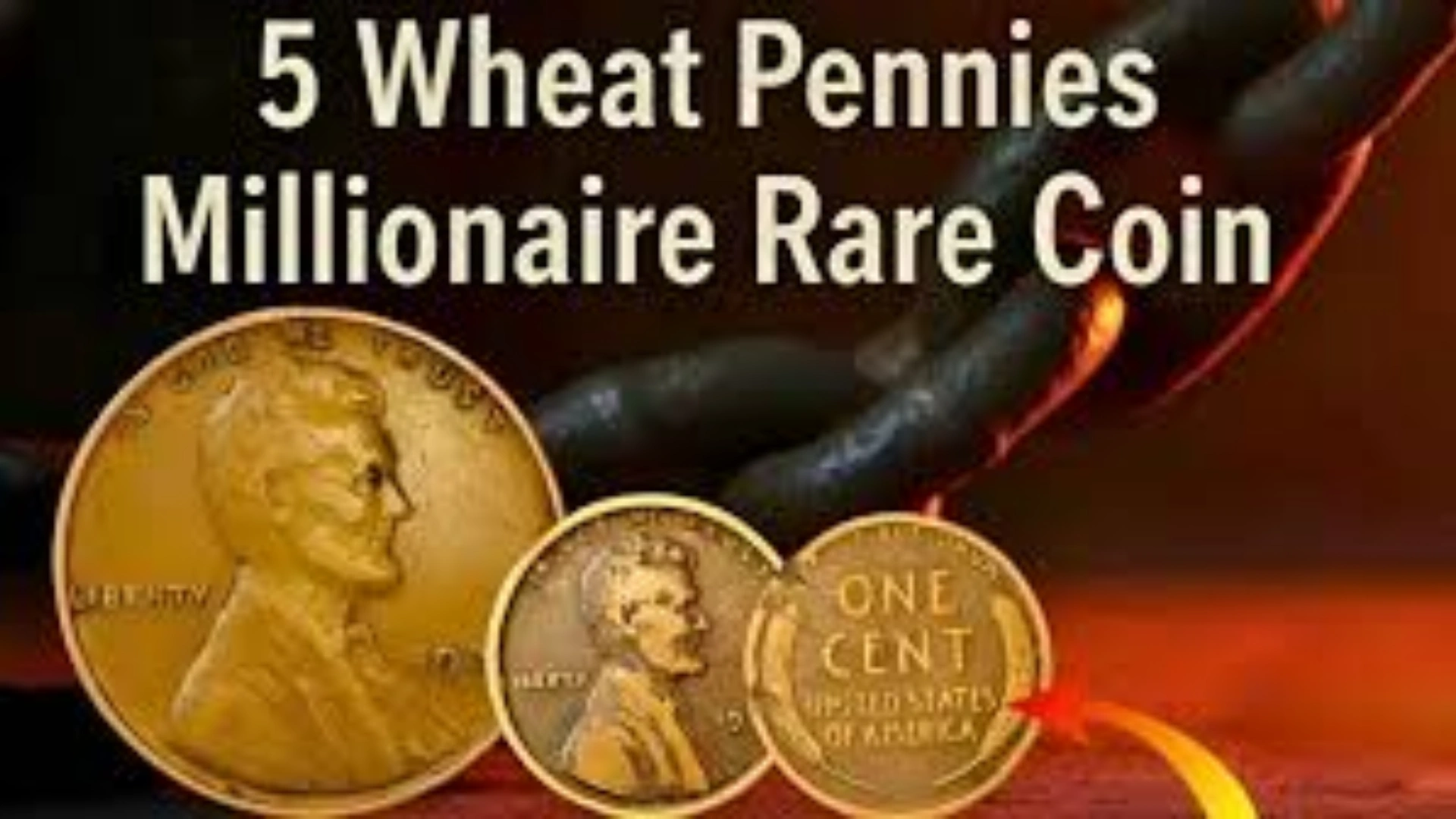
5 Wheat Pennies That Could Make You a Millionaire: Have you ever wondered if that old penny in your change could be worth a fortune? Wheat pennies, those classic Lincoln cents with wheat stalks on the back minted from 1909 to 1958, include some ultra-rare versions that have sold for millions at auctions. These coins get their name from the two wheat ears on the reverse side. While most are just worth a few cents, certain minting mistakes or low production runs turn them into treasures. In this guide, we’ll cover five standout examples that could change your life if you find one in top shape. We’ll explain why they’re valuable, how to spot them, and tips for investing.
This article focuses on real auction records and facts to help you invest wisely in rare coins. With coin collecting booming, these wheat pennies are hot investments.
Why Some Wheat Pennies Are Worth Millions
Wheat pennies are popular because they tell stories from American history, like World War II shortages or early 1900s designs. Value comes from:
- Rarity: Low numbers made or errors.
- Condition: Graded on a 1-70 scale by services like PCGS or NGC; higher is better.
- Color: Red (original shine) beats brown (worn).
- Errors: Mistakes like wrong metal or doubled images.
Over the years, auctions have seen prices soar due to collector demand. A perfect coin can fetch seven figures!
The Top 5 Rare Wheat Pennies That Sold for Huge Sums
Here are five wheat pennies that have made headlines with million-dollar sales or close to it. These are based on verified auction records.
1. 1943 Bronze Error Penny
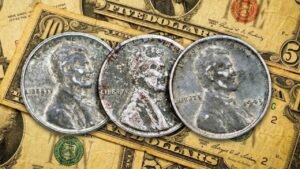
During World War II, pennies switched to steel to save copper, but a few bronze blanks (from 1942) slipped through. Only about 20-40 exist across all mints (Philadelphia, Denver, San Francisco). The unique 1943-D bronze sold for $1.7 million in 2010. A 1943-S example hit $504,000 in 2020. Spot it: Copper color (not silver steel), doesn’t stick to a magnet, weighs 3.11 grams.
2. 1909-S VDB Lincoln Cent
The first wheat penny year, with designer Victor Brenner’s initials (VDB) on the back – removed quickly due to fuss. Only 484,000 made at San Francisco. High-grade red ones fetch big money; an MS67RD sold for $168,000 in 2022. It’s the “holy grail” for collectors.
3. 1914-D Wheat Penny
Denver mint made just 1.193 million – super low compared to others. A key date for sets. An MS66+RD graded one sold for $158,625 in 2018. Circulated versions start at $200+.
4. 1955 Doubled Die Obverse Penny
Made in Philadelphia, the die doubled, making “LIBERTY” and “1955” look thick and blurry – visible without a glass. About 24,000 escaped into circulation. An MS65+RD hit $124,875 in 2020, a record.
5. 1922 No D Error Penny
All 1922 pennies were from Denver, but some lost the “D” mint mark from overused dies. The strong reverse (clear wheat) versions are rare. Auction highs include $92,000 for a top example.
Value Table: Auction Records and Estimates
Check this table for quick facts on these coins’ values (averages for high grades like MS65+):
| Coin Type | Rarity Reason | Record Auction Sale | Current High Estimate |
|---|---|---|---|
| 1943 Bronze Error | Wrong metal (bronze) | $1.7M (2010) | $1M-$2M+ |
| 1909-S VDB | Low mintage + initials | $168K (2022) | $100K-$200K |
| 1914-D | Very low mintage | $158K (2018) | $100K-$160K |
| 1955 Doubled Die | Visible doubling | $124K (2020) | $100K-$125K |
| 1922 No D (Strong Rev) | Missing mint mark | $92K (2008) | $50K-$100K |
Note: Prices vary by grade; get yours certified!
How to Identify and Authenticate
- Use a magnifying glass for errors like doubling or missing marks.
- Test metal/magnet for 1943.
- Avoid cleaning – it ruins value.
- Submit to PCGS/NGC for grading to sell high.
Investment Tips for Rare Wheat Pennies
Start small: Buy certified coins from reputable dealers or auctions like Heritage. Store in holders away from air/moisture. Market trends show values rising with demand. Beware fakes – always authenticate.
FAQ: Questions About Million-Dollar Wheat Pennies
Q: How can a penny be worth millions? A: Rarity from errors or low production, plus perfect condition, drives prices at auctions.
Q: Where do I check if my penny is valuable? A: Look for mint marks (S, D), test 1943 with magnet, check for doubling on 1955.
Q: Are there fakes of these coins? A: Yes, especially 1943 bronze or 1909-S VDB. Get professional grading.
Q: What’s the cheapest way to start collecting? A: Buy common wheat pennies for $0.10-$1, then aim for keys like 1914-D.
Q: Will values keep rising? A: Likely, as fewer perfect coins survive and collectors grow.
Q: How do I sell a rare penny? A: Use auctions like Heritage or dealers; certified coins fetch more.
Q: Any other rare wheat pennies? A: Check 1944 steel errors or 1931-S for $10K+ potential.
Conclusion: Hunt for Hidden Treasures in Your Pocket Change
These five wheat pennies show how history and mistakes create huge value – from $1.7 million 1943 bronzes to doubled 1955s. If you have old coins, inspect them today; you might hold a millionaire-maker. Investing in rare coins is exciting but needs caution – research, authenticate, and enjoy the hobby. Stay updated via sites like PCGS or CoinFacts for market shifts. Who knows? Your next find could be life-changing.