
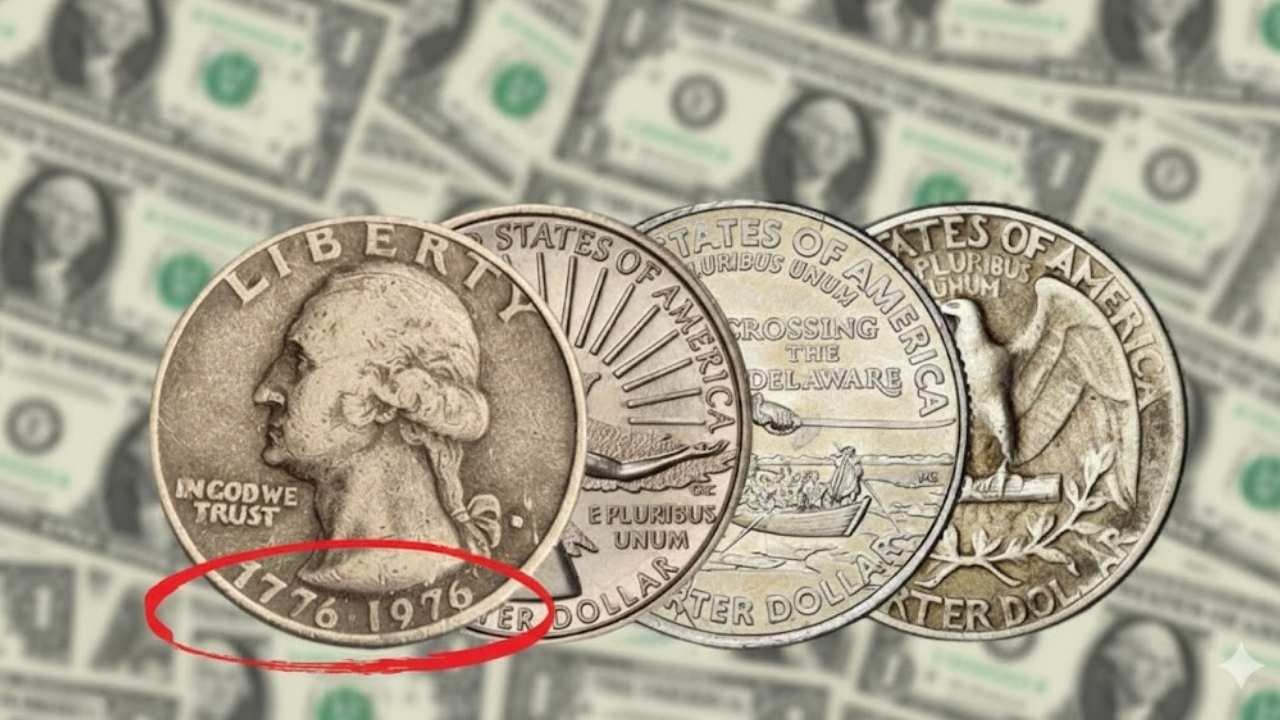
As of December 19, 2025, most of the 1.6 billion Bicentennial quarters featuring the Colonial Drummer are worth exactly 25 cents. However, collectors are currently paying premiums of $500 to $20,000 for four specific rare varieties.
If you have a jar of old change, keep an eye out for these “hidden treasures.”
1976-S Silver Uncirculated (MS69)
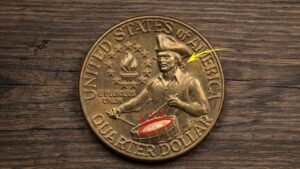
While regular quarters are “clad” (copper-nickel), the San Francisco Mint produced a special 40% silver version. Most are worth $10–$25, but a “perfect” strike is a goldmine.
- The Rarity: A regular-strike (non-proof) silver quarter in MS69 condition is nearly impossible to find.
- The Value: A PCGS-graded MS69 example holds the auction record at $19,200.
- How to identify: Look for the “S” mint mark and a solid silver edge with no brown copper stripe. It must look brand new, with zero scratches.
1976-D Doubled Die Obverse (DDO)
This is the most famous “error” variety for this year. It occurs when the coin’s design is stamped twice, leaving a ghost-like shadow on the details.
- The Rarity: The FS-101 variety is the most sought-after.
- What to look for: Significant doubling on the letters in “LIBERTY” and the motto “IN GOD WE TRUST.” You might need a magnifying glass to see it clearly.
- The Value: Circulated examples sell for $200–$500, but pristine versions can exceed $8,000.
Struck on a Wrong Planchet (Dime or Penny)
This is a major “minting accident” where a quarter design is accidentally stamped onto a metal blank (planchet) intended for a different coin.
- The Rarity: Extremely high. These coins usually look “wrong” immediately.
- What to look for:
- On a Dime Planchet: The coin will be silver-colored, much smaller than a quarter, and thinner.
- On a Penny Planchet: The coin will be copper-colored and smaller.
- The Value: These major errors frequently sell for $1,500 to $5,000+ at specialized auctions.
1976-D “MS68” High-Grade Clad
For the billions of standard copper-nickel quarters made in Denver, value is determined entirely by condition. Most quarters in circulation are too scratched to be valuable.
- The Rarity: A Grade MS68 means the coin is virtually flawless, as if it was caught the moment it fell from the press.
- The Value: While a typical 1976-D is worth 25 cents, an MS68 specimen can fetch $2,500 to $5,000 because so few have survived in that condition.
- How to identify: It must have full “mint luster” (the original shine) and absolutely no visible nicks, even under a microscope.
2025 Quick Reference Table
| Variety | Mint Mark | Condition | Estimated Value |
| Silver Regular Strike | S | MS69 (Perfect) | $19,000+ |
| Doubled Die Obverse | D | Circulated – MS | $200 – $8,000 |
| Wrong Planchet | Any | Mint Error | $1,500 – $5,000 |
| High-Grade Clad | D | MS68 (Pristine) | $2,500 – $5,000 |
Export to Sheets
Tips for Checking Your Change
- The “S” Mint Mark: Always set aside any Bicentennial quarter with an “S”. Even if it isn’t worth thousands, it’s a collector’s item worth more than face value.
- The Edge Test: If the edge is solid silver with no brown copper line, you’ve found the 40% silver version.
- Magnification: Doubled Dies are often missed by the naked eye. Use a 10x jeweler’s loupe to look at the date and “Liberty.”