
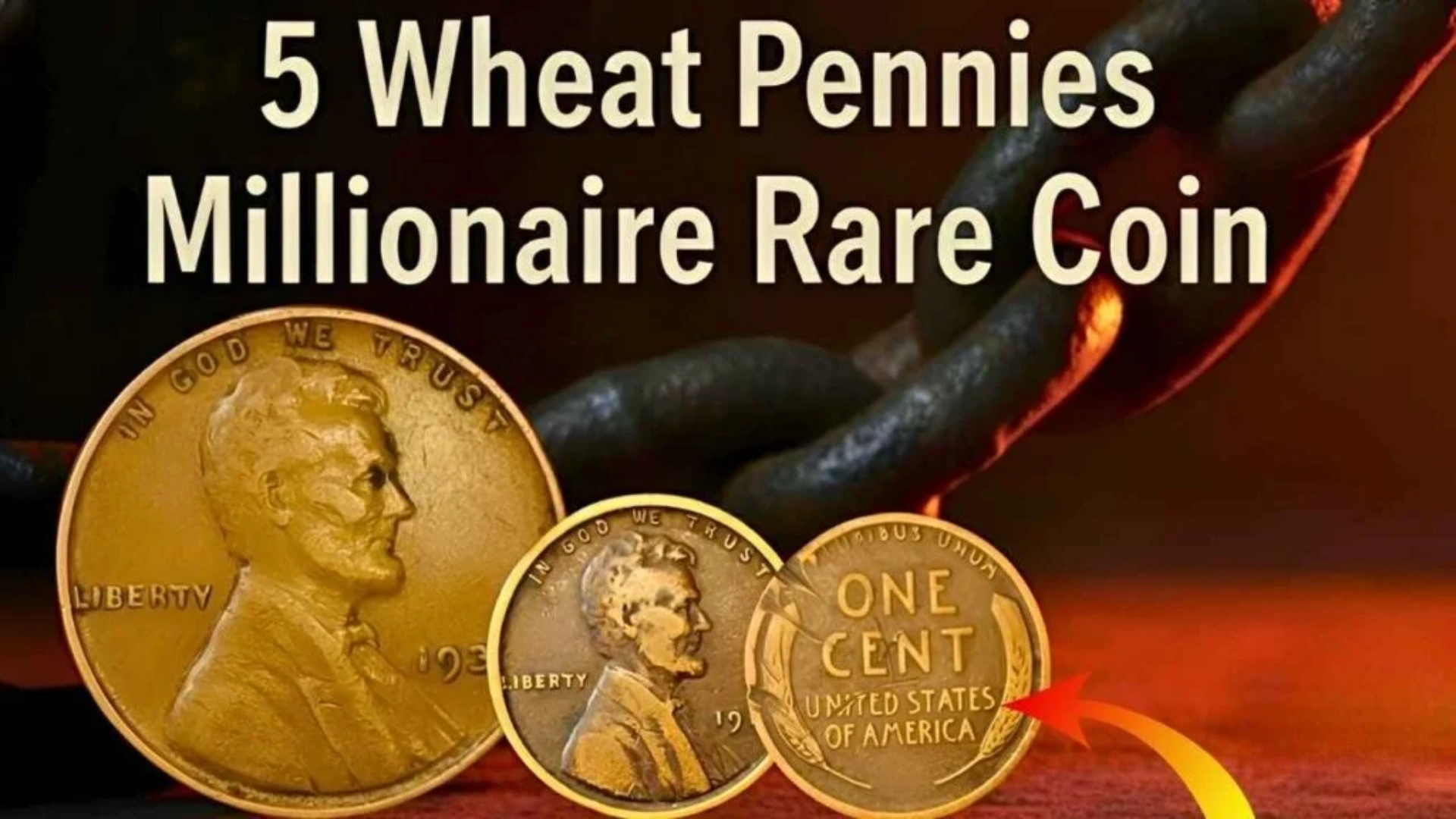
5 Wheat Pennies: Got a jar of old pennies at home? You might be sitting on a small fortune! Wheat pennies (Lincoln cents from 1909–1958 with wheat stalks on the back) are fun to collect, but a few rare ones can be worth thousands—or even millions—to the right buyer. These valuable coins come from low production numbers, minting mistakes, or perfect condition.
While most wheat pennies are worth just a few cents, the top rarities have sold for life-changing money at auctions. In this beginner-friendly guide, we’ll cover the five most valuable wheat pennies in 2025, how to spot them, current values, and smart tips for collecting or selling. No expert knowledge needed—just a magnifying glass and some patience!
Wheat pennies are popular because billions were made, so they’re easy to find in change, attics, or estate sales. But rarity drives price: errors, key dates, or high grades (little wear) make all the difference. Values here are based on recent 2025 auctions and PCGS/NGC data—always get yours appraised for exact worth.
Top 5 Most Valuable Wheat Pennies in 2025
Here are the five wheat pennies that top collector wish lists. Values depend on condition (circulated vs. mint state) and grade (e.g., MS-65 means near-perfect).
| Rank | Coin | Key Feature | Average Value (Good Condition) | Record Sale (Mint State) |
|---|---|---|---|---|
| 1 | 1943 Bronze (any mint) | Struck in copper instead of steel | $100,000+ | $1,700,000+ (1943-D) |
| 2 | 1909-S VDB | Low mintage, designer’s initials | $500–$1,000 | $100,000+ |
| 3 | 1955 Doubled Die Obverse | Dramatic doubling on date/letters | $1,000–$2,000 | $125,000+ |
| 4 | 1922 No D (Plain) | Missing mint mark, strong reverse | $500–$1,500 | $20,000+ |
| 5 | 1914-D | Low Denver mintage | $200–$500 | $10,000+ |
These five stand out for rarity and demand—owning one in top grade could indeed make you rich!
1. 1943 Bronze Penny: The Million-Dollar Mistake
During World War II, pennies switched to steel to save copper for the war. But a few bronze blanks slipped through—creating the rarest modern error. Only about 20 known (Philadelphia, Denver, San Francisco). Spot it: Copper color (not silver steel), weighs 3.11 grams, no magnet stick. Value: $100,000+ circulated; $1.7 million record for 1943-D.
2. 1909-S VDB: The Controversial Classic
First year of Lincoln cents, San Francisco mint (“S”), with designer Victor David Brenner’s initials (“VDB”) on reverse. Public outcry over “advertising” led to quick removal—only 484,000 made. Spot it: “S” mint mark, “VDB” at bottom reverse. Value: $500+ good; $100,000+ gem red.
3. 1955 Doubled Die Obverse: The Famous Error
A minting flaw caused extreme doubling on date and “LIBERTY”—visible to naked eye. About 20,000–24,000 entered circulation. Spot it: Blurry, shadowed letters/date. Value: $1,000+ average; $125,000+ high grade.
4. 1922 No D (Plain): The Missing Mint Mark Mystery
All 1922 cents from Denver (“D”), but worn dies erased the mark on some. “Strong reverse” varieties (clear wheat details) are rarest. Spot it: No “D”, sharp reverse wheat. Value: $500+ good; $20,000+ mint state.
5. 1914-D: The Low-Mintage Key Date
Denver minted only 1.2 million—tiny vs. Philadelphia’s 75 million. Spot it: “D” mint mark under date. Value: $200+ circulated; $10,000+ uncirculated.
How to Check Your Wheat Pennies for Value
- Grab a magnifier and good light.
- Note year, mint mark (“D” Denver, “S” San Francisco, none Philadelphia).
- Look for errors: Doubling, wrong metal, missing marks.
- Check condition: Little wear = higher value.
- Weigh/test: 1943 bronze ~3.11g copper.
Free apps like PCGS CoinFacts help identify.
Where to Sell or Appraise Your Find
- Professional grading: PCGS or NGC ($20–$50, adds value).
- Auctions: Heritage or Stack’s Bowers for top prices.
- Dealers: Local shops or online like APMEX.
- Avoid eBay unsold—fakes common for these.
FAQs on Valuable Wheat Pennies
Q: Can I really become a millionaire from one penny? A: Yes for top-grade 1943 bronze ($1M+ records), but most valuable ones sell $1,000–$100,000.
Q: Are fakes common? A: Yes—especially 1943 “bronze” (often plated steel) and added mint marks. Get authenticated.
Q: What’s the best condition term? A: “Red” (full original copper shine) for uncirculated—worth 2–10x more than brown.
Q: Still find these in circulation? A: Rare, but possible in old jars or estates—check family coins!
Q: Safe to clean my penny? A: No—cleaning lowers value. Leave as-is.
Conclusion
Wheat pennies are more than pocket change—they’re tiny pieces of history with big potential. The top five—1943 bronze, 1909-S VDB, 1955 doubled die, 1922 no D, and 1914-D—can turn a lucky find into serious money, from $1,000 to over $1 million in perfect condition. Rarity, errors, and preservation drive prices, so inspect your old coins carefully.
Start hunting today—sort that jar, visit a dealer, or grade suspects. Coin collecting is exciting and rewarding. Who knows? Your next millionaire-maker might be hiding in plain sight. Happy hunting!